

Mat Pilates in Broughty Ferry
A small room, six people, and nothing you need to know beforehand.
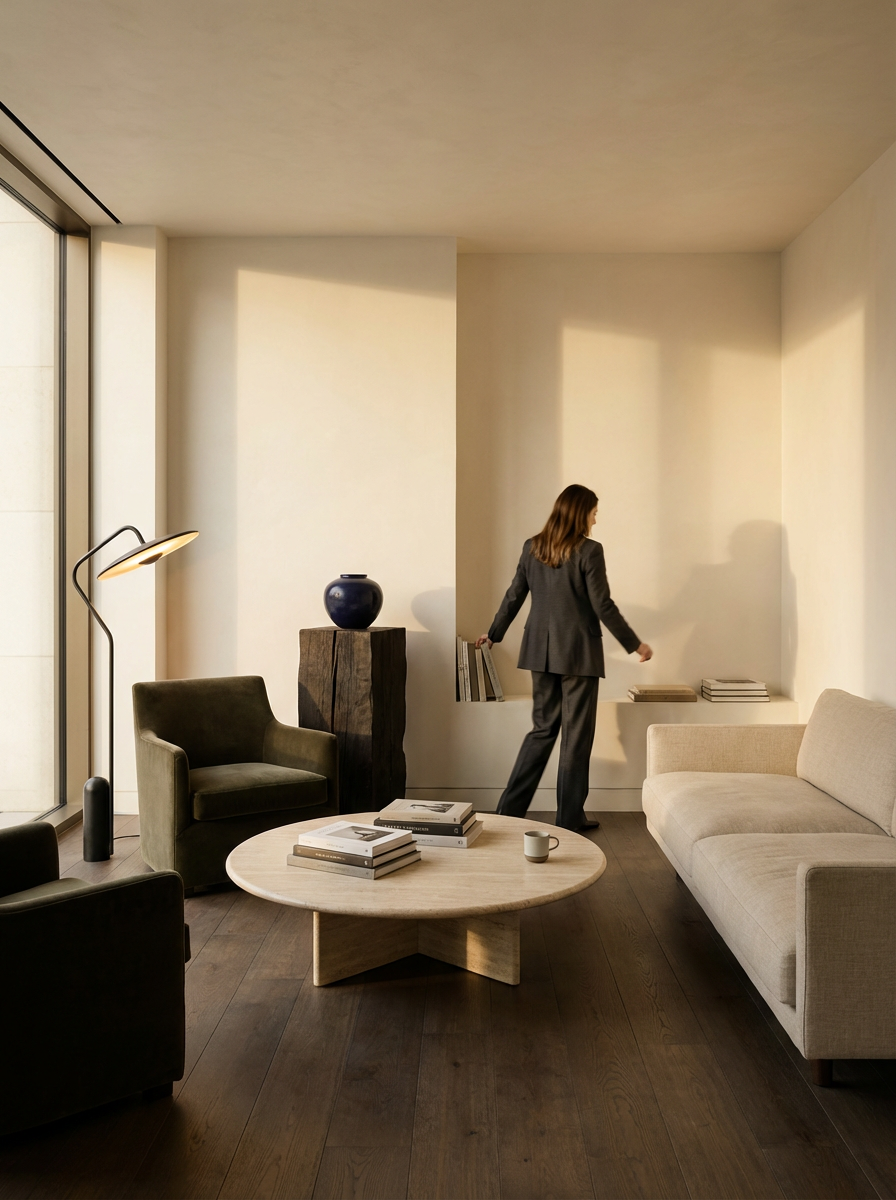
Mat Pilates is the kind of pilates most people have tried before. There's no equipment to learn and nothing to set up — just fifty minutes of guided movement in the upstairs studio, with five other people and someone watching closely enough to help.
You don't need to be fit and you don't need any experience. Classes run Wednesday morning, Thursday evening and Saturday morning, and you'd be welcome at any of them.
What Mat Pilates is — and what makes this one different
Plenty of people arrive having done Pilates before. In a gym, in a church hall, on a Tuesday night with thirty other people. And often they'll say they came away never quite sure whether they'd been doing it right. That isn't a reflection on them. It's what happens when one person is trying to watch thirty bodies at once.
There are six people in the room, not thirty
Six is the number the class is built around. It's small enough that we can see what your hips are doing and come over and change it, rather than calling instructions from the front and hoping they land. You'll be spoken to by name in your first class. By your third, we'll know which shoulder is the sore one.
It's taught by a physiotherapist, and that changes what you're asked to do
Ailsa is an HCPC-registered physiotherapist as well as a Pilates instructor, so what you're asked to do is built on how bodies actually load, tire and recover — not on a sequence learned once and repeated. If your knee doesn't want to bend today, you'll be handed something else to do rather than told to take it easy and left to work the rest out yourself.
You're not on the floor
The tower reformers sit flat and make one raised, padded surface across the studio, so you're working at roughly 20cm from the floor. No lowering yourself onto a cold floor and no getting back up off it afterwards. If that's the bit you've quietly been worried about, it isn't part of this class.
Every exercise has a version that belongs to you
One class, six people, six slightly different versions of what's being asked. That's the real advantage of working without machines — an exercise can be made gentler or harder with a change of position or a band, and we do it as we go, for whoever needs it. Nobody gets left behind and nobody stands there bored.
It's the original Pilates, and still the foundation of everything else
Joseph Pilates built the mat work first. The machines came afterwards, to help people find what the mat was already asking of them. So this isn't a cut-down version of a reformer class — it's the thing the reformer was invented to teach.
If something comes up that doesn’t feel right, there's a physiotherapist in the building
Most of the time we'll adapt around a sore back and that's the end of it. But if it needs looking at rather than working around, you don't have to go and find someone else, explain it all again, and wait. It's the same building and the same person.
What happens in a class
Come five minutes early and we'll take it from there
The door is at 594 Brook Street. The mat studio is upstairs — eighteen steps that turn two corners — and someone will meet you, show you where to leave your things and point you at a space. Your platform will already be set up with everything you need on it. We’ll know it’s your first class with us and we’ll make sure you're moving in a way that works for you . You don't need to arrive knowing anything.
We start standing, and we start gently
Shoes off, phone away, a little standing balance work while everyone settles. It's the softest possible beginning, and it quietly does a job for us too — how you're standing and shifting your weight tells us a good deal about how your body is today, and that shapes what we ask of you for the next fifty minutes.
We work our way down, and then back up again
From standing onto your hands, a little four-point kneeling, round to sitting and some seated work. Then onto your back for bridging and abdominal work, side-lying next, onto your front, and finally back up towards standing. It's the same shape every week with different exercises inside it. That's deliberate — you always know roughly where you are in the class, even when the exercise itself is new to you.
You'll use a band, a ball, sometimes a magic circle
Small props rather than machines. A resistance band, the Pilates ball, now and then a magic circle or a tennis ball. They give you something to push into or resist against, which makes an exercise far easier to feel and quite often harder to do. Everything you need is here and set out before you arrive.
It's mostly the same faces each week
Six people who come at the same time every week get to know one another, and there's usually a bit of chat before and after. Nobody minds at all if you'd rather not join in — plenty of people come for the quiet hour and head straight off. But it's one of the things people are most surprised by, that a Pilates class turned into somewhere they knew people.
Mat classes run three times a week
Wednesday at 10.30am, Thursday at 6pm and Saturday at 10.30am. Fifty minutes each, all in the upstairs studio. Classes are capped at six and they do fill, so we encourage booking in advance.
Mat, reformer or Studio Circuits — how to tell which one is yours
This is the question we're asked most. The short answer is that they're three different kinds of class rather than three rungs of a ladder. There's nothing to work your way up to, and nothing you'd be skipping by starting wherever you like the look of.
Mat is where most people start, and plenty of people stay
Because there's nothing to learn before you begin, it's the easiest door to walk through. It's also a class people stay in for years — there's no ceiling on it. The work gets more demanding as you get stronger rather than sitting where you left it. If you come and like it, you don't have to graduate to anything.
The reformer classes run in the same room, on the same machines
Mat runs on top of the tower reformers. The reformer classes run on them. Same studio, same six people, same amazing view — the difference is whether the machine is carrying some of the work with you or you're finding all of it yourself. Plenty of people do one of each in a week and would tell you they feel completely different afterwards. More information about reformer classes.
Studio Circuits is downstairs, and it's your own programme
In a mat class the room moves together. In Studio Circuits everyone is doing something different — your own set of exercises across the reformer, trapeze table, chair and ladder barrel, chosen for your body by the physiotherapist who assessed you. It's on the ground floor as well. If you're working around something specific, or stairs are the thing standing in your way, that's the one to look at. More information about Studio Circuits classes.
If your body changes, you don't have to start again somewhere else
Backs flare up. Knees get replaced. Babies arrive. Most of the time we'll simply adapt your mat class and carry on. But if you need something more individual for a while, it's all in this building — physiotherapy, one-to-one Pilates, postnatal classes, a circuit built around you — with the same people who already know how you move. You won't have to explain yourself from the beginning to anybody.
One class pack covers all of it
Packs aren't tied to one kind of class. The same pack pays for a mat class upstairs, a reformer class in the same room or a circuit downstairs, so you can book what fits the week you're actually having rather than the week you planned. It also means you don't have to decide in advance which kind of Pilates will suit you.
And on the weeks you can't get here, the class comes to you
Every class we teach online is a mat class. Same teacher, same voice, same shape of class, from your living room on the weeks when leaving the house simply isn't happening. It's one of the reasons people choose mat in the first place — it's the only class we run that works both ways. More information about Pilates at Home.
If you've never done Pilates before
Most people who come for the first time have spent a while deciding to. Weeks, sometimes months, occasionally years. So here's what's usually sitting behind the hesitation, answered plainly.
You don't need to be flexible, or fit, or to have done Pilates before.
Those are the three reasons people give for not starting, and not one of them is a requirement. Flexibility is something Pilates builds, not something you're supposed to arrive with. Every exercise has a gentler version and a harder one, and working out which one belongs to you, today, is our job, not yours.
You'll recognise yourself in the room
There's no uniform here and nobody is performing. The five people beside you are somewhere between their thirties and their seventies, and most of them walked in as unsure as you feel. If you've been into a fitness class before and known immediately that it wasn't built for someone like you, this is a different room.
“All you need to do is arrive exactly as you are.”
If something hurts, tell us before the class rather than after
The shoulder, the knee, the back you've stopped mentioning to people. It isn't a confession and it doesn't disqualify you from anything. It's the information that lets us hand you a different version of an exercise before you find out the hard way. And if it turns out to need looking at rather than working around, there's a physiotherapist in the building.
If you've tried Pilates before and it didn't stick, it may not have been you
For a lot of people, their only experience of Pilates is a big class where nothing was adapted and nobody came over. That isn't really the same activity. When there are six of you, an exercise that doesn't suit your shoulder gets changed there and then, and you go home knowing you did it properly rather than hoping you did. It's a very different hour.
Nobody is watching you
This is the fear people are most embarrassed to name and the most common one by a distance. Everyone is on their own platform, concentrating, mostly looking at the ceiling. The only person watching you is the one being paid to. Everybody else is far too busy wondering what their own shoulders are up to.
You can stop whenever you like, and nobody will ask why
Sit one out, take the gentler version, have a drink of water. Nothing has gone wrong. Four exercises done well are worth a great deal more than ten done through gritted teeth, and we'd far rather you left wanting to come back.
Prices and how to start
The best way to start is three classes for £45
Three classes to use within 21 days. Enough to come twice in a fortnight and still have one in hand to decide with — one class only tells you whether you liked the teacher, three tells you whether you like Pilates. It's a one-off for new clients, and there's nothing to cancel afterwards.
If mat is the class you want, ten classes are £140
That's £14 a class, to use over three months — our lowest price per class, and the one to choose if mat is what you're actually here for rather than a way in to something else. It covers our Postnatal Pilates class as well, so there are four classes a week to choose from. Six people in the room, a physiotherapist teaching it, and everything you need set out before you arrive.
If you'd like the run of the studio, packs start at £105
Five classes for £105 is £21 a class, ten for £190 is £19, and fifteen for £255 is £17 — the more you commit to, the less each class costs. These cover mat, Studio Circuits and the reformer classes, so you can book whatever suits the week you're having rather than the week you planned. The mat-only pack is cheaper per class because it only does one thing. These cost a little more because they go everywhere in the building.
Packs renew automatically, and you can stop them yourself
When you use your last class the next one starts, so there's no gap and nothing to remember. You can pause or cancel in your account whenever you like, or send us an email and we'll do it for you. Nobody has to have an awkward conversation about it.
“Whenever you’re ready, we’re here.”
Common questions
No. Mat is where most people start, precisely because there's nothing to learn before you begin. Tell us it's your first class when you book or when you arrive, and we'll keep an eye on you.
Do I need to have done Pilates before?
It's different rather than easier, and the two get confused a lot. Without springs to assist you, you're finding all of the work yourself, which plenty of people find harder. What's true is that a mat exercise can be made gentle or made demanding without any equipment at all — which is why it works in a room of six people at six different stages.
Is mat Pilates easier than reformer?
Mostly the number of people and who's teaching. There are never more than six of you here, and the class is taught by an HCPC-registered physiotherapist, so exercises get adapted to you in the room rather than called out from the front. You'll also be working on slightly raised padded platforms rather than down on the floor.
What's the difference between this and a Pilates class at a gym?
How many people are in a class?
Never more than six.
Will I be on the floor?
No. We work on the tower reformer platforms, which sit flat to make one raised, padded surface at about 20cm from the ground. Getting down onto the ground and back up again isn't part of the class.
What should I wear, and what do I need to bring?
Something comfortable to move in — leggings or shorts and a top that stays put when you're lying on your back. Bring grip socks and a bottle of water. We sell grip socks at the studio if you don't have a pair.
What if I can't do one of the exercises?
Then we'll suggest something different. That happens in most classes, to most people, and it isn't a sign of anything other than a body having an opinion that day. You can also sit an exercise out without explaining yourself to anybody.
Can I do mat Pilates with a sore back or a dodgy knee?
Usually, yes — tell us when you arrive and we'll adapt anything that doesn't suit you. If it's new, severe, or you're not sure what it is, book in with the physiotherapist first and have it looked at properly rather than worked around. It's the same building and the same person.
When do mat classes run, and do I need to book?
Wednesday at 10.30am, Thursday at 6pm and Saturday at 10.30am, fifty minutes each. Yes, please book — classes are capped at six and they do fill.
Can I try one class before committing to anything?
The best way to try us is three classes for £45, to use within 21 days. Three is enough to tell you whether Pilates suits you rather than whether you liked one particular morning, and there's nothing to cancel afterwards.
Do you run online classes too?
Yes, and every one of them is a mat class — so what you learn here is what you'll do at home. More information about Pilates At Home.
Where are you, and is there step-free access?
594 Brook Street, Broughty Ferry, Dundee DD5 2EA. The mat studio is upstairs — eighteen steps, turning two corners, and no lift. Studio Circuits classes are on the ground floor if stairs are difficult.