Can I do Pilates if I can't get down on the floor?

Studio Pilates Reformer teaching demo
Yes, you can. A lot of Pilates happens on equipment rather than on a mat, and at Nutrio you can start a class without ever needing to get down to the floor.
This is one of those questions that rarely gets asked out loud. It tends to hide behind "I'll book once I'm a bit fitter" or "I'm not sure Pilates is really for me". If getting down to the floor, or getting back up again in front of other people, is the part that's quietly putting you off, I'd love you to know it doesn't have to stand between you and a class.
Pilates doesn't have to happen on the floor
Mat Pilates is only one way of doing Pilates. Much of it is done on equipment: the reformer, the chair and the trapeze table. Each one lets you work lying down, sitting or standing, with springs that can support your movement as well as add to it.
That matters if the floor is the hurdle. On equipment, your starting position is chosen for your body, not the other way round. You build strength, control and confidence from a position that feels manageable.
Why getting up from the floor can feel harder than it used to
Getting down to the floor and back up again is a whole-body task. It asks for strength in your legs and hips, a bit of balance, joints that are comfortable bending, and, quite often, confidence. If you haven't needed to do it much for a while, it simply becomes less familiar.
Knees that don't love kneeling, a hip that's been giving you grief, or a back that's seized up after a long day can all add to it. So can the worry of being the one who needs a hand up while everyone else springs to their feet.
None of this means your body is letting you down. It usually means it hasn't been asked to do that particular thing lately. That's something we can work with, at your own pace.
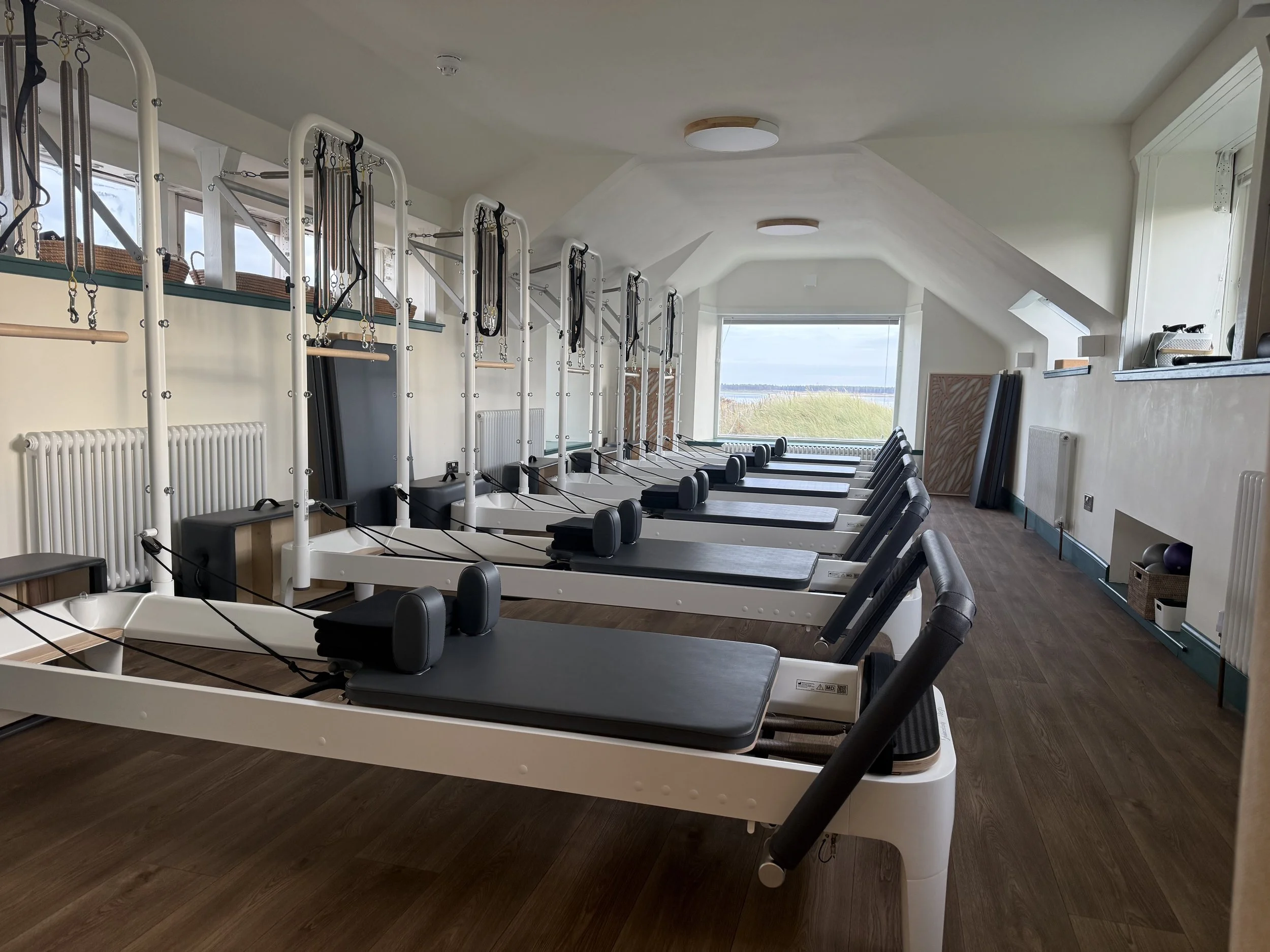
Reformer apparatus set up, higher than on the floor
How reformer Pilates works if the floor isn't for you
A reformer is a padded, sliding carriage on a raised frame, with springs underneath and a footbar at one end. You sit down onto the carriage, then lie back with your head supported. There's no getting down onto the floor and no getting up off it.
Your instructor will show you how to get on and off the reformer before you start, and there's no rush. Once you're on, the springs are set for you. The machine holds you while you work, so you can move through a comfortable range with support and gradually ask a bit more as your body allows.
A few things worth knowing:
Reformer | Foundation is the place to start. The machine gets explained step by step, and there's no prerequisite.
Reformer | Control uses the same exercises with slower, more deliberate transitions between them. It's hard work, not an easier class, and it suits anyone who finds a quicker pace too much while they're finding their feet.
The reformer studio is upstairs. It's around 18 steps, turning two corners, and there's no lift. I'd rather tell you that now than have you find out on the day.
Every class is a maximum of six, so your instructor can see exactly how you're getting on and off and help if you'd like it. You'll find more about each class on our reformer Pilates page.
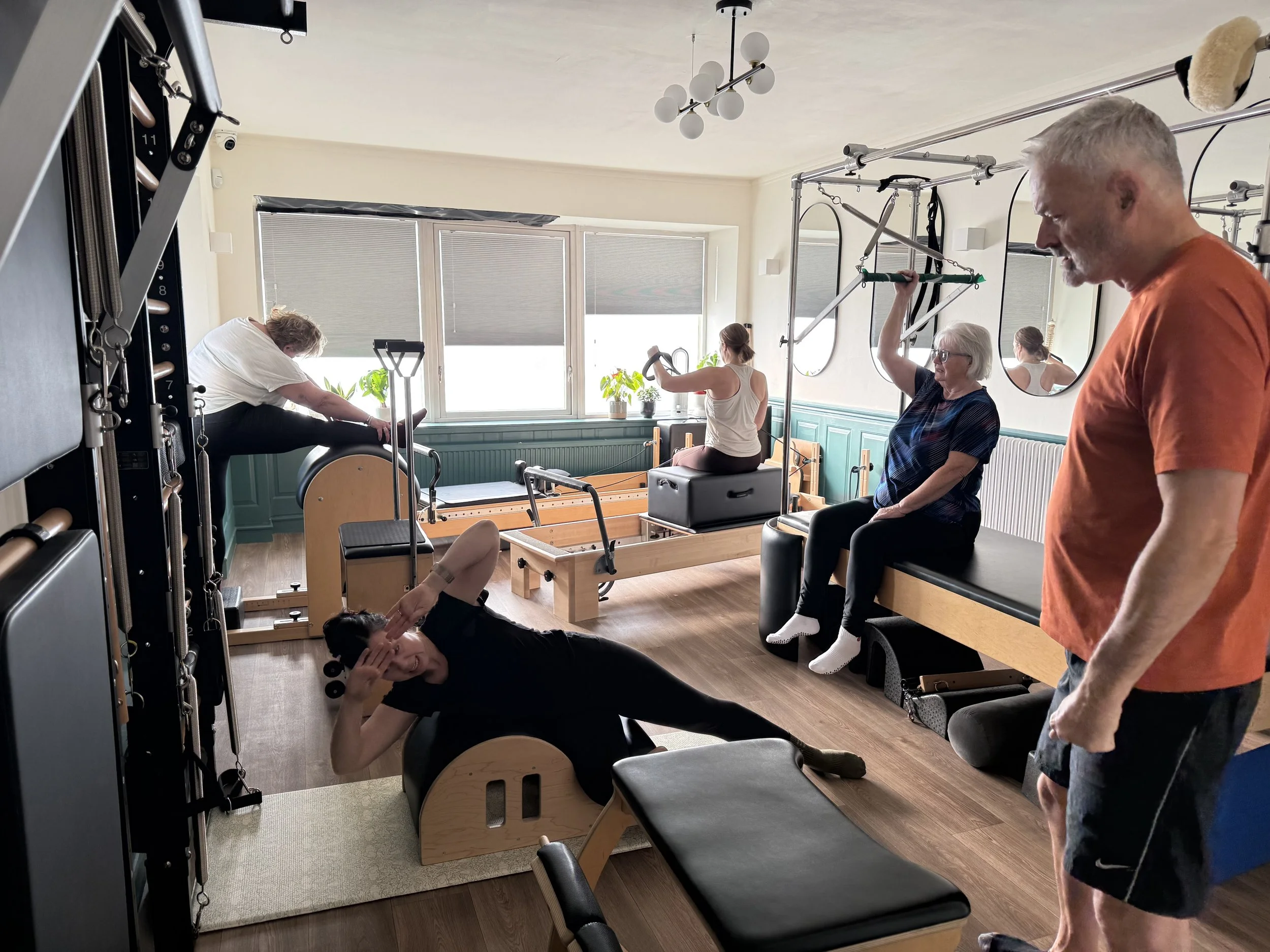
A group of people doing individual exercises at their own comfort level.
Studio Circuits: Pilates sitting, standing or lying, on the ground floor
If the floor and the stairs are both a concern, Studio Circuits is a lovely place to start. It runs in the main studio downstairs, so there are no stairs at all.
In Studio Circuits everyone works through their own programme on the equipment, which means you might be sitting on the chair while the person next to you is lying on the trapeze table. Your programme is built around you, so if getting down low isn't right for you yet, it simply isn't part of it. Like every class at Nutrio, it's a maximum of six.
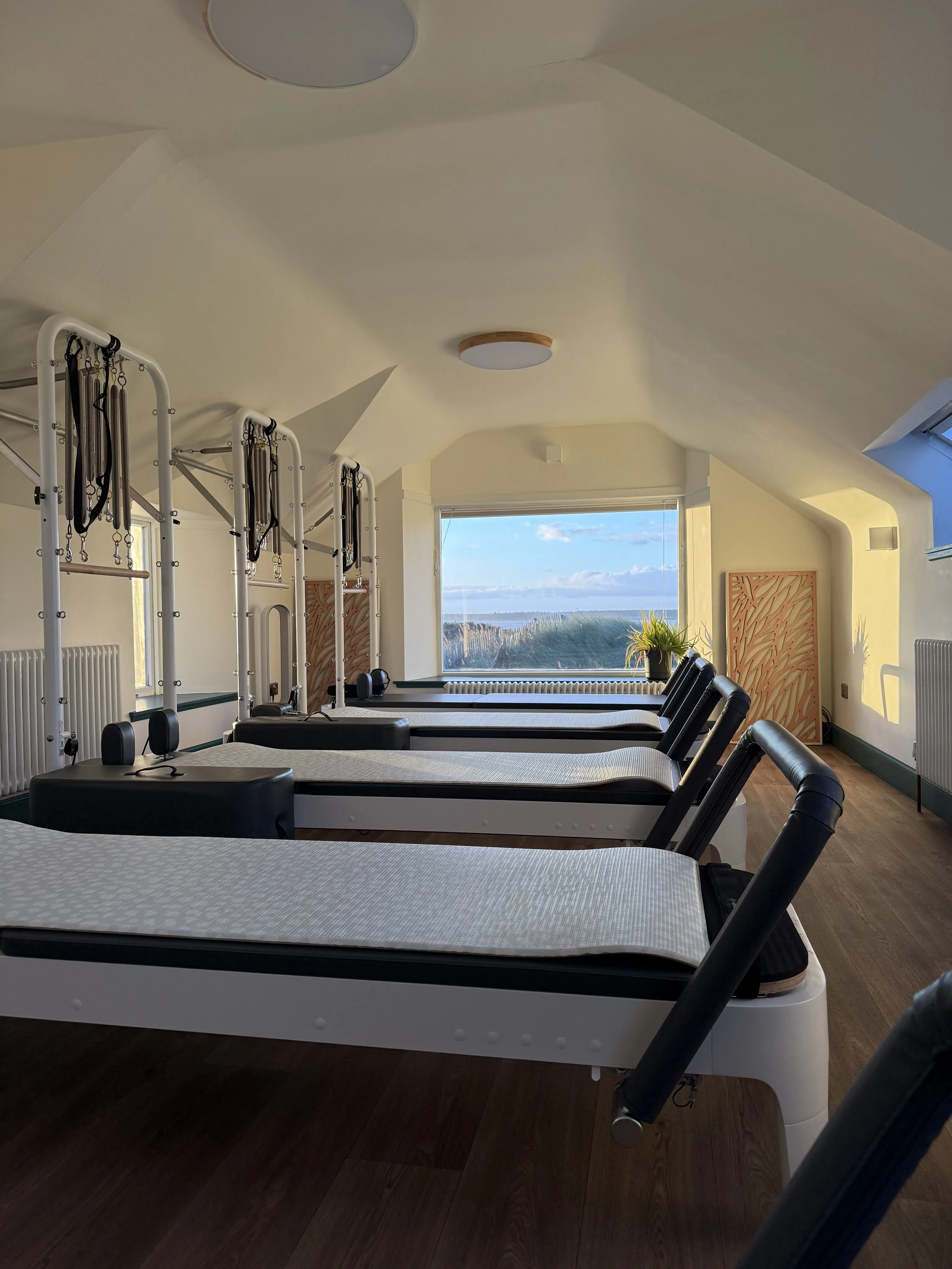
Mat Pilates set up on top of reformer machines, not on the floor
What about mat Pilates?
Mat Pilates does happen on the floor, so if the floor is the bit that worries you, I wouldn't suggest it as your first class. That isn't a judgement on you; it's about choosing the class that fits where you are today.
Some people come to the mat later on; others stay happily on the equipment. Both are fine.
Getting up from the floor is a skill you can build
Here's the why behind the what. The things that make getting up from the floor easier, like leg and hip strength, balance and control through your middle, are exactly what equipment-based Pilates works on. You don't need to be able to do the hard thing before you start working on the parts that make it easier.
The NHS recommends that adults over 65 do activities that improve strength, balance and flexibility on at least two days a week, and lists Pilates among its examples of muscle-strengthening activities. It also says this kind of exercise will help you feel stronger and more confident on your feet.
Some people find that, after a while, getting down to the floor becomes something they'd quite like to try. If that's you, your instructor can help you build up to it. If it isn't, that's absolutely fine too. The point is to keep you capable in the life you actually live.
When it's worth getting advice first
For most people, finding the floor tricky is a sign of a body that hasn't been asked to do it lately. Sometimes, though, it's worth getting advice before you book a class.
Please speak to your GP or book a physiotherapy assessment first if getting up from the floor has become difficult quite suddenly or is getting steadily worse, if it followed a fall, if it's held back by pain rather than stiffness, or if you feel dizzy or unsteady as you stand. I can't tell what's going on in your body from a blog post, and an assessment is how we find the right starting place for you.
Questions people ask about Pilates and the floor
Will I need to get on the floor at all in a reformer class?
No. Reformer classes are done on the machine. If an exercise involves kneeling on the carriage and that doesn't suit your knees, just tell your instructor and they'll give you another option.
What if I need help getting on or off the reformer?
That's completely normal, especially in your first few classes. Your instructor will show you how and stay close while you do it. Take as long as you need; nobody is waiting on you.
Which class should I book first?
If stairs are fine for you, start with Reformer | Foundation. If stairs are hard, or you'd like a programme built around you, start with Studio Circuits in the main studio downstairs.
Can I do Pilates after a hip or knee replacement?
That depends on you, your surgery and the advice you've been given, so it's one to ask rather than guess. Get in touch before you book and we'll point you to the right starting place.
Do I need anything special?
Comfortable clothes and, for reformer classes, grip socks, because the carriage moves and bare feet slide. Please arrive ten minutes before the class starts so there's time to get settled.
Whenever you're ready
If the floor has been the reason you haven't booked, I hope this takes that reason away. The simplest way to try a class is our intro offer: three group classes for £45, valid for 21 days, reformer included. If it feels like home, our class packs of 5, 10 or 15 classes keep it going. You'll find everything you need on our New to Nutrio page.
All you need to do is arrive exactly as you are. Whenever you're ready, we're here.
Ailsa Bell MSc BSc is a Chartered Physiotherapist and Pilates teacher at Nutrio Physio & Pilates, 594 Brook Street, Broughty Ferry. HCPC registered (PH127188), CSP member (112899). This blog is general information and not a substitute for individual clinical advice. If you have a specific injury or condition, please get in touch and we'll point you to the right starting place.