If your exercise routine has started to slip now the evenings are dark, you haven't failed and you're not lazy. It usually happens because the routine was built for lighter, easier weeks, and the answer is to make it smaller and more fixed, not to try harder.
I see it most years. Something gets started with real intent at the end of the summer. Then, somewhere around week five or six, the novelty wears off, the clocks go back, and the hour that felt easy to protect starts quietly going missing.
Your routine slipping in autumn isn't a willpower problem
When a routine falls away, most women I talk to blame themselves first. "I just don't have the discipline." "I always do this." I'd gently push back on that.
Willpower is a poor thing to build a week on, especially if you're the person everyone else's week runs through. If your plan only works on the days you've got energy to spare, it was always going to struggle once the weather turned. That's not a flaw in you. It's a flaw in the plan, and plans can be changed.
Why exercise gets harder when the nights draw in
A few things tend to land at once at this time of year, and it helps to name them:
It's dark. Heading out at six o'clock feels very different in October than it did in June. The sofa makes a strong case.
The newness has worn off. The first few weeks run on a bit of excitement. After that, the routine has to stand on its own.
Everyone's diary fills up. If you've got children, parents or a busy job, autumn is when everyone else's week gets fuller, and yours is usually the one that gives.
Coughs and colds start going round. Missing a week because you're unwell is perfectly sensible. The trouble is what happens next.
None of these is dramatic. That's exactly why they work on us. Nobody decides to stop. It just gets slightly harder to go, a few weeks running.
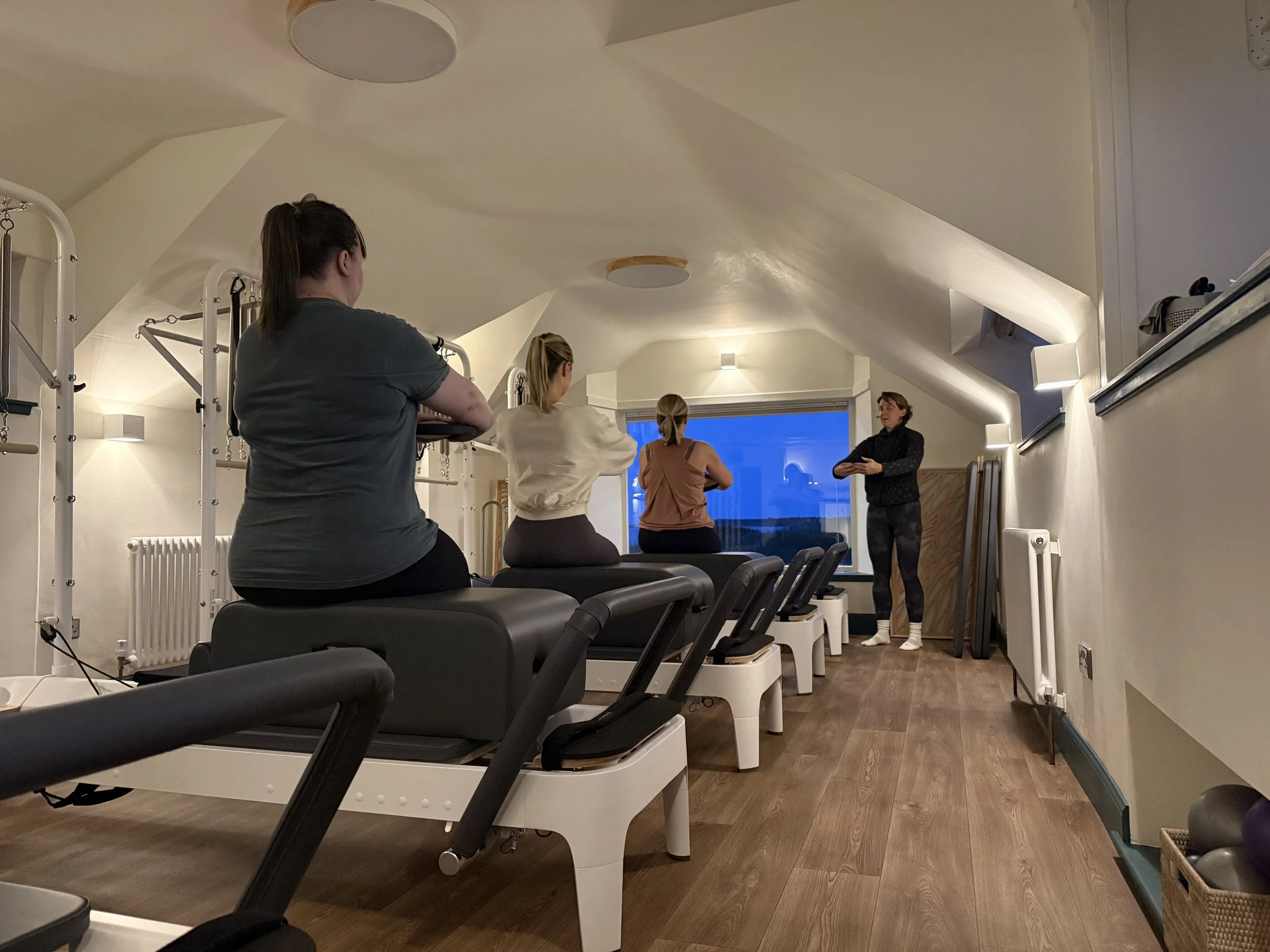
Evening Reformer Pilates class
Missing one week is where most routines quietly stop
The week you miss isn't really the problem. The week after is.
Once there's a gap, going back starts to feel like a bigger thing than it is. You wonder whether you'll have lost ground, whether anyone will notice, whether you'll have to explain. So you wait until you feel ready, and waiting is very easy to keep doing.
I'd much rather you came back after a gap with no explanation than stayed away because you felt you owed one. A missed week isn't a reset button. Your body doesn't forget everything in a fortnight, and nobody's keeping score.
Make your exercise routine smaller, not stricter
The routines that survive the winter are usually the modest ones. Here's what tends to help:
Pick one fixed hour, not a vague intention. "Thursday at half nine" survives a busy week far better than "three times a week, somehow".
Choose the time of day your week actually protects. For some women that's early morning, before anyone else is up. For others it's straight after the school run, or on the way home from work. There's no right answer, just the one that holds.
Book ahead. A booked class is a decision you've already made, so you don't have to make it again on a cold, wet night.
Plan for the missed week before it happens. Decide now that if you miss one, you simply book the next. No catching up, no doubling up.
Keep it small enough to keep. Once a week, kept up through the dark months, will do more for you than three a week that stops in November.
That's the why behind the what: a routine you can keep in your worst week is worth more than a perfect one you can only keep in your best.
A booked class is easier to keep than a plan in your head
This is one of the reasons I love small group classes at this time of year. When you're one of six, your instructor knows your name, notices how you're moving and sets things up for you. Your place has been kept for you. It's a gentle kind of accountability, the kind that feels like being expected rather than being checked up on.
Every class at Nutrio is a maximum of six, and there are early-morning and evening classes as well as daytime ones, so there's usually an hour that fits around work or family. If the stairs up to the reformer studio are hard for you, Studio Circuits runs in the main studio downstairs, with everyone working through their own programme. You can read more about the reformer classes on our reformer Pilates page.
And for the nights you really can't face going out, studio clients have the on-demand video library free in the Nutrio app. It isn't a replacement for the studio, but twenty minutes in the living room still counts.
Coming back after months away, not weeks
Sometimes the gap isn't a week or two. It's a season, or a year, or "since before the baby". If that's you, the same is true, just more so: you don't need to get fitter before you come back.
If you're new to the reformer, or it's been a long while, Reformer | Foundation is the place to start. The machine gets explained, nothing is assumed, and there's no prerequisite. Reformer | Control takes the same exercises with slower, more deliberate transitions. It's hard work, not an easier class, but many people find the steadier pace a comfortable way back in.
If part of the reason you stopped was an old injury flaring up, or a niggle that hasn't settled, it's worth getting that looked at before you start again. I can't tell you what's going on from a blog post, and I wouldn't want to guess. A physiotherapy assessment is how we find the right starting place for you.
Questions people ask about keeping exercise going in winter
Is it normal to lose motivation to exercise in autumn and winter?
Yes, very. Darker evenings, colder weather and fuller weeks make it harder for almost everyone. It says nothing about whether you're "the type" who sticks with things.
How often should I aim to come?
Whatever your week can genuinely hold. Twice a week is a lovely rhythm if you can manage it, but once a week, kept up, is a perfectly good place to be.
I've stopped going and I feel a bit embarrassed to come back. What should I do?
Just book. You don't need to explain where you've been, and nobody will ask you to. Your instructor will set things up for where your body is today, not where it was in the summer.
Are there classes before or after work?
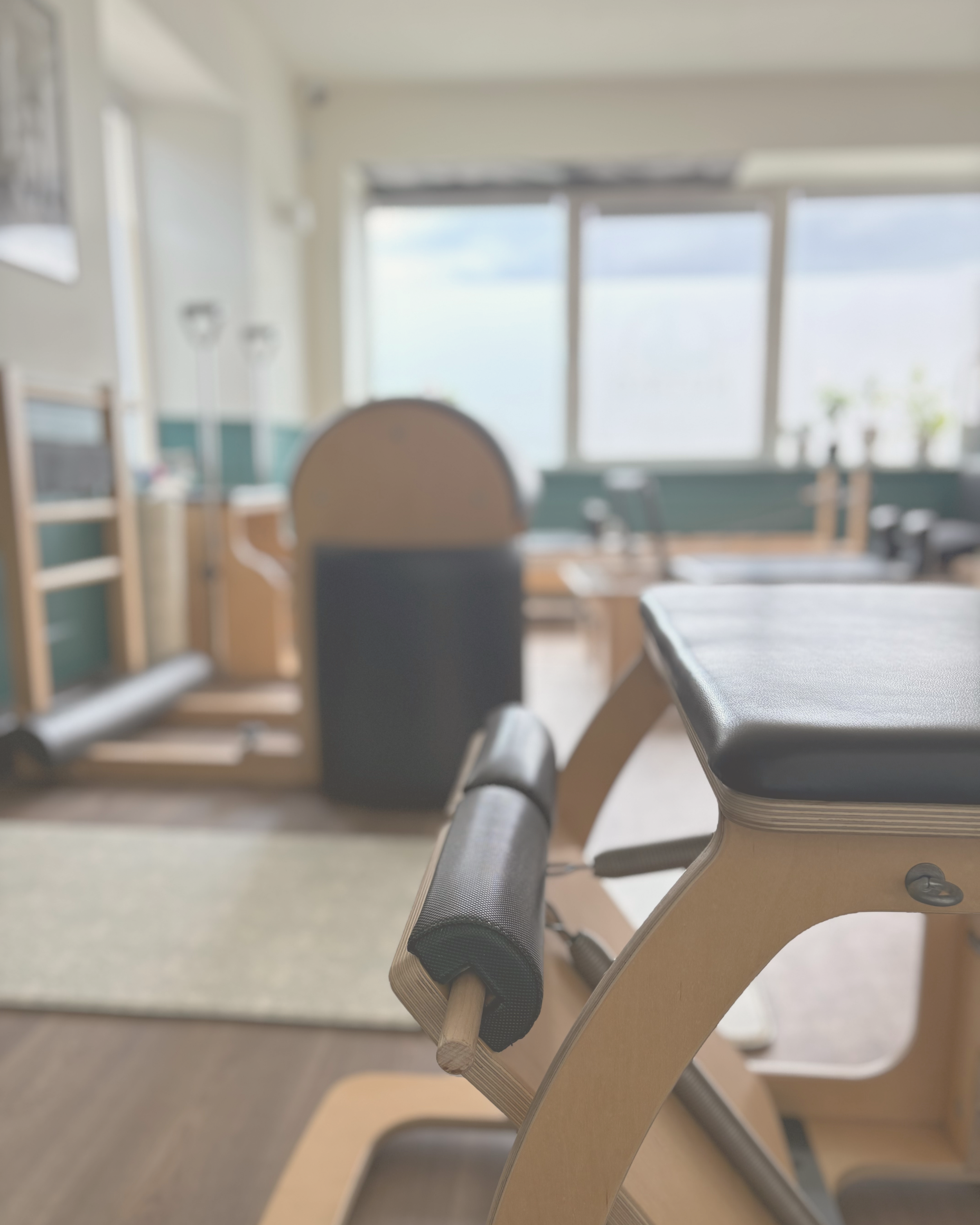
Studio Circuits Pilates Class set up for an early morning class.
Yes. There are early-morning and evening classes as well as daytime ones, and you'll see the full timetable when you go to book.
What do I need to bring?
Comfortable clothes, and grip socks for reformer classes. Arrive ten minutes before the start so your instructor can get you set up.
Whenever you're ready
If your routine has slipped, you don't need a fresh start or a big new plan. You need one hour that's yours, booked in.
If you're new to Nutrio, the simplest way in is our intro offer: three group classes for £45, valid for 21 days, reformer included. Start with Foundation, see which class feels like home, and if you'd like to keep going, our class packs of 5, 10 or 15 classes mix and match across reformer, Studio Circuits and Mat. You'll find everything about getting started on our New to Nutrio page.
All you need to do is arrive exactly as you are. Whenever you're ready, we're here.
Ailsa Bell MSc BSc is a Chartered Physiotherapist and Pilates teacher at Nutrio Physio & Pilates, 594 Brook Street, Broughty Ferry. HCPC registered (PH127188), CSP member (112899). This blog is general information and not a substitute for individual clinical advice. If you have a specific injury or condition, please get in touch and we'll point you to the right starting place.